How to Wash a Car Without Scratching the Paint
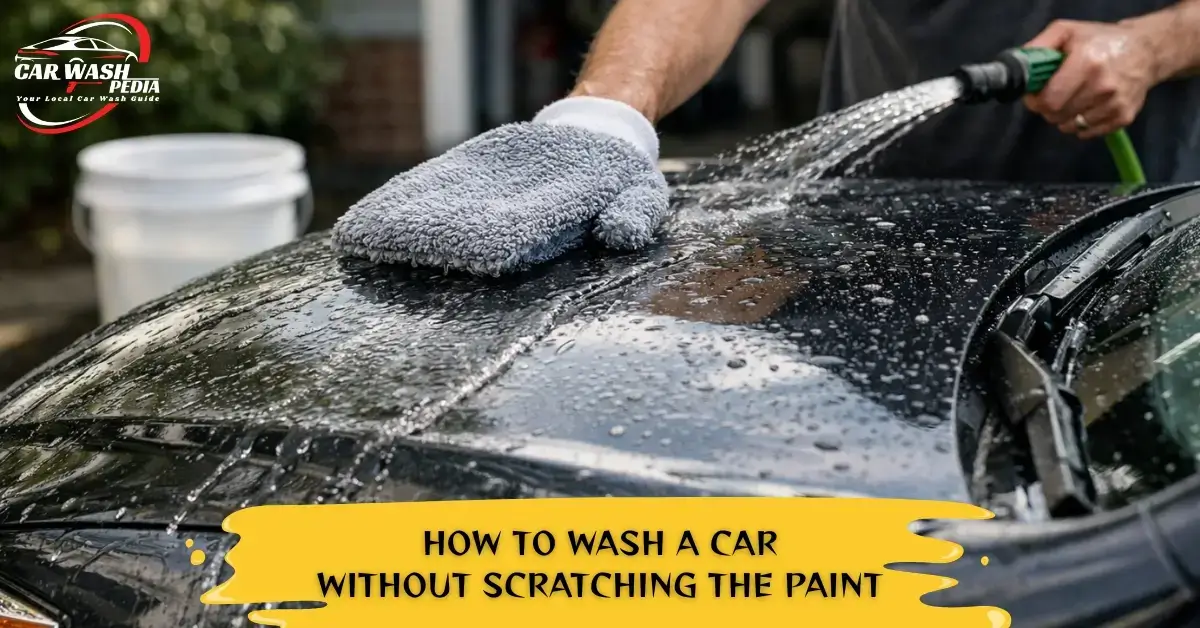
Most scratches do not come from driving. They come from washing.
People usually blame the soap, or the car wash down the street, but that is rarely where things actually go wrong. It is almost always the small stuff nobody thinks twice about, the towel you grabbed without checking, the bucket you did not bother refilling, the scrubbing you did a little too hard because a spot would not lift. Here is what actually prevents scratches, not just the obvious advice everyone repeats.
Why “Being Careful” Is Not Enough on Its Own
Paint does not get scratched by soap or water. It gets scratched by dirt, grit, and sand that were already sitting on the surface before a mitt or towel ever touched it. Once that grit gets trapped against the paint and dragged across it, even a gentle hand creates fine scratches, the same way sandpaper does not need much pressure to leave a mark. This is the one fact the rest of this guide is built around, every step below exists to keep grit away from the paint before contact happens, not to wash more gently.
Rinse Everything Off Before You Touch the Paint
A thorough rinse before washing removes as much loose dirt as physically possible, so there is far less grit left for a mitt to drag around later. A hose on a strong jet setting works, a pressure washer works better if you have one. If the car has bird droppings, tree sap, or bug residue stuck on, do not wipe at them directly, soak the spot with water for a minute or two first so it softens and lifts on its own, wiping dried, acidic residue is one of the fastest ways to etch a mark into clear coat.
Use Two Buckets, With a Grit Guard in Each
One bucket sounds fine in theory. In practice, it turns into a mud puddle within a few minutes, and every time you dip the mitt back in, you are reloading it with the exact grit you just removed. Two buckets fix this, one with soapy water for washing, one with plain water for rinsing the mitt before it goes back into the soap. A grit guard, a plastic insert that sits at the bottom of each bucket, adds one more layer of protection, it knocks dirt off the mitt and traps it below the guard so it cannot get picked back up on your next dip. This single habit prevents more scratches over time than almost anything else on this list.
Wash Top to Bottom, and Treat the Lower Half as a Different Job
The lower third of a car, rocker panels, lower doors, bumpers, is always dirtier than the roof and hood, road spray and splashback settle there constantly. Washing the whole car with the same mitt and the same pass treats a lightly dusted roof and a grime-caked rocker panel as the same job, which they are not. Start at the top and work down, and rinse your mitt more frequently once you reach the lower panels, since that is where the heaviest grit is concentrated.
Keep Wheels and Body Completely Separate
Brake dust is metallic and genuinely abrasive, closer to fine metal shavings than ordinary road dirt. A mitt or brush that touches a wheel should never touch the body afterward, even once, even if it looks clean. Keep a dedicated wheel brush or mitt, and wash the wheels either first or last, never in the middle of washing the body panels, to avoid any risk of cross contamination.
Use Real Wash Tools, Not Whatever Is Nearby
Old bath towels, T-shirts, and kitchen sponges all trap grit inside their fibers instead of releasing it, which turns them into scratching tools the moment they touch the car. A proper wash mitt, either microfiber or lambswool, and clean microfiber towels are built with a looser weave specifically so dirt sits away from the surface instead of getting pressed against it. This is not an upsell, it is the actual mechanical difference between a tool that lifts dirt and one that grinds it in.
Let the Soap Do the Work, Not Your Arm
Scrubbing harder does not clean better, it presses whatever grit is on the mitt directly into the clear coat. Use light, straight-line passes rather than circular scrubbing, circles concentrate contact into a pattern that becomes visible as swirl marks once light hits the paint at an angle, especially on dark colors. If a spot will not lift with a light pass, go back over it again gently rather than pressing harder the first time.
Dry the Car Before It Dries Itself
Letting a car air dry leaves mineral deposits behind as water spots, and drying it with the wrong towel can undo everything you just did carefully. Use a large, clean microfiber drying towel, and blot or lightly drag it across the surface rather than wiping back and forth in circles. If you have access to one, a leaf blower or dedicated car dryer clears water out of trim gaps, mirrors, and badges far more effectively than a towel ever will, and it touches nothing.
A Few Extra Habits That Matter More Than People Expect
- Wash in the shade or during cooler parts of the day. Direct sun heats the panel and dries soap and water spots onto the surface before you can rinse them off properly.
- Use a dedicated pH-neutral car soap, never dish soap. Dish soap strips wax and sealant along with the dirt, leaving the paint more exposed than before you started.
- If the paint already feels rough or gritty under your palm after washing, that is embedded contamination a wash alone will not remove, a clay bar treatment before your next wash lifts it out safely instead of letting it grind in on every future wash.
If you rinse thoroughly, keep your tools clean and separated, and slow down just slightly, scratching becomes genuinely hard to do by accident. It is not about achieving a perfect technique, it is about avoiding the handful of habits that cause almost every scratch people blame on bad luck.
For the complete step-by-step process from start to finish, including product recommendations, see our full DIY car wash guide.